










Quick answer
- China runs on mobile payments—set up Alipay or WeChat Pay before you go and carry backup cash.
- The Great Firewall blocks many Western apps; install a VPN or use an eSIM with domestic access.
- Prepare for squat toilets, no tipping, crowded public spaces, and a food culture that varies hugely by region.
Introduction: China Is Different, but Preparation Makes the Shock Manageable
You’ve booked your first trip to China, and now the worries creep in: How do I pay? Will my phone work? What if I can’t read a menu? It’s normal to feel anxious. China is a modern, fast-changing country, but some everyday habits are very different from what you’re used to at home. The good news? Almost every first-timer worry has a simple solution—if you know what to expect.
This guide walks you through the biggest culture shocks Western travelers face: from cashless payments and the Great Firewall to squat toilets and no tipping. Each section gives you actionable steps, backup plans, and warnings so you feel confident before you land. Think of this as your pre‑departure briefing. By the end, you’ll know exactly what to prepare, what to do after arrival, and how to turn potential shocks into smooth travel experiences.
The most important rule: Prepare your digital life before you leave. Set up your payment apps, connectivity, and offline maps while you still have familiar internet. Once you land, the pace is fast, but you’ll be ready.
1. China Is More Cashless Than Many Western Travelers Expect
If you come from a country where credit cards and cash are king, China will feel like a leap forward. In major cities like Beijing, Shanghai, and Chengdu, even street vendors and taxis expect mobile payments. You’ll see QR codes everywhere—at restaurants, metro turnstiles, and convenience stores. The two dominant apps are Alipay and WeChat Pay. Both now accept foreign credit cards, but you must set them up before your trip.
Here’s the step‑by‑step: Download Alipay and WeChat Pay on your phone, link your international card, and complete identity verification. Then do a test transaction—buy a coffee or top up your phone—while you still have reliable internet. Without a test, you might discover a problem when you’re hungry at 11 PM in a back alley. Test your payment app before you leave your home country.
Always carry backup: a second credit card and some cash (Chinese yuan). Small merchants, taxi drivers who don’t use ride‑hailing apps, and some hotel deposits may still require cash or a card. Keep ¥500–1000 in small notes for emergencies. And save offline screenshots of your hotel address, train booking, and payment QR codes—your phone battery or data might fail.
2. The Internet Works Differently Behind the Great Firewall
You’ve probably heard that Google, Facebook, Instagram, WhatsApp, and many Western sites are blocked in China. This is true. The Great Firewall also slows or blocks VPNs unless you have a reliable one already installed. Without preparation, you’ll lose access to your maps, email, social media, and messaging apps. That’s a big problem because you rely on many of these for travel.
The solution is to choose one connectivity method: eSIM, international roaming, local SIM, or pocket WiFi. For most travelers, eSIM is easiest if your phone is compatible. Buy a China‑specific eSIM plan that works on local networks (like China Unicom or China Mobile) and includes a mainland Chinese IP address. This avoids the need for a separate VPN. Activate the eSIM before you leave. If your phone doesn’t support eSIM, consider a pocket WiFi device you pick up at the airport.
Even with data, some apps may not work. Download offline maps (like Maps.me or Apple Maps offline) and save screenshots of critical info: hotel address in Chinese, train schedules, and emergency numbers. Keep a physical printout of your first day’s itinerary—if your phone dies, you’ll still find your way to the hotel.
3. Super Apps Replace Many Separate Travel Tools
In the West, you use different apps for messaging, maps, taxis, and payments. In China, one or two apps do everything. WeChat is a messaging app, but also a payment platform, a booking tool for trains and hotels, and a way to call a taxi. Alipay is similar—it’s not just for payments; you can order a ride, check in for a flight, or find a nearby restaurant. This integration feels efficient once you’re used to it, but it can be overwhelming on day one.
Start by learning the interface of Alipay and WeChat Pay before you arrive. Both have English versions. Within Alipay, the “Transport” section lets you access metro codes in many cities. You can also use Didi (China’s Uber) via Alipay or its own app. For maps, Apple Maps works well in China (it uses Gaode data), and Google Maps is unreliable. Alternatively, download Gaode Maps (also known as Amap) in English – it gives accurate walking and driving directions.
Pro tip: Before you leave, create a folder on your phone home screen with your China travel apps: Alipay, WeChat, Gaode Maps or Apple Maps, a translation app, and your eSIM provider’s app. Screenshot the QR code for your hotel booking and train e‑ticket. This preparation saves you from fumbling in a queue.

4. Crowds, Queues, and Personal Space Can Feel Intense
China has over 1.4 billion people, and you’ll feel it in public spaces. Metro platforms during rush hour, popular tourist attractions like the Great Wall or Zhangjiajie, and even shopping malls can be shoulder‑to‑shoulder crowded. Personal space is much smaller than in Europe or North America. People may bump into you without apologizing, and queues can be more aggressive—some people will push to the front.
How to cope? First, adjust your expectations. Crowds are normal; don’t take jostling personally. When boarding a train or subway, be ready to move with the flow—hesitate and you’ll get swept aside. For tourist sites, go early (right at opening time) or late in the afternoon to avoid peak crowds. And at popular spots like the Great Wall, choose less‑visited sections such as Mutianyu over Badaling.
Always keep your valuables secure in crowds. Use a cross‑body bag with a zipper, and keep your phone in your hand or front pocket. Pickpocketing is rare but happens in packed areas. Stay patient; the chaos is part of the experience, and soon you’ll learn to navigate it with a calm mind.
5. Food Culture Is More Regional, Shared, and Fast‑Moving
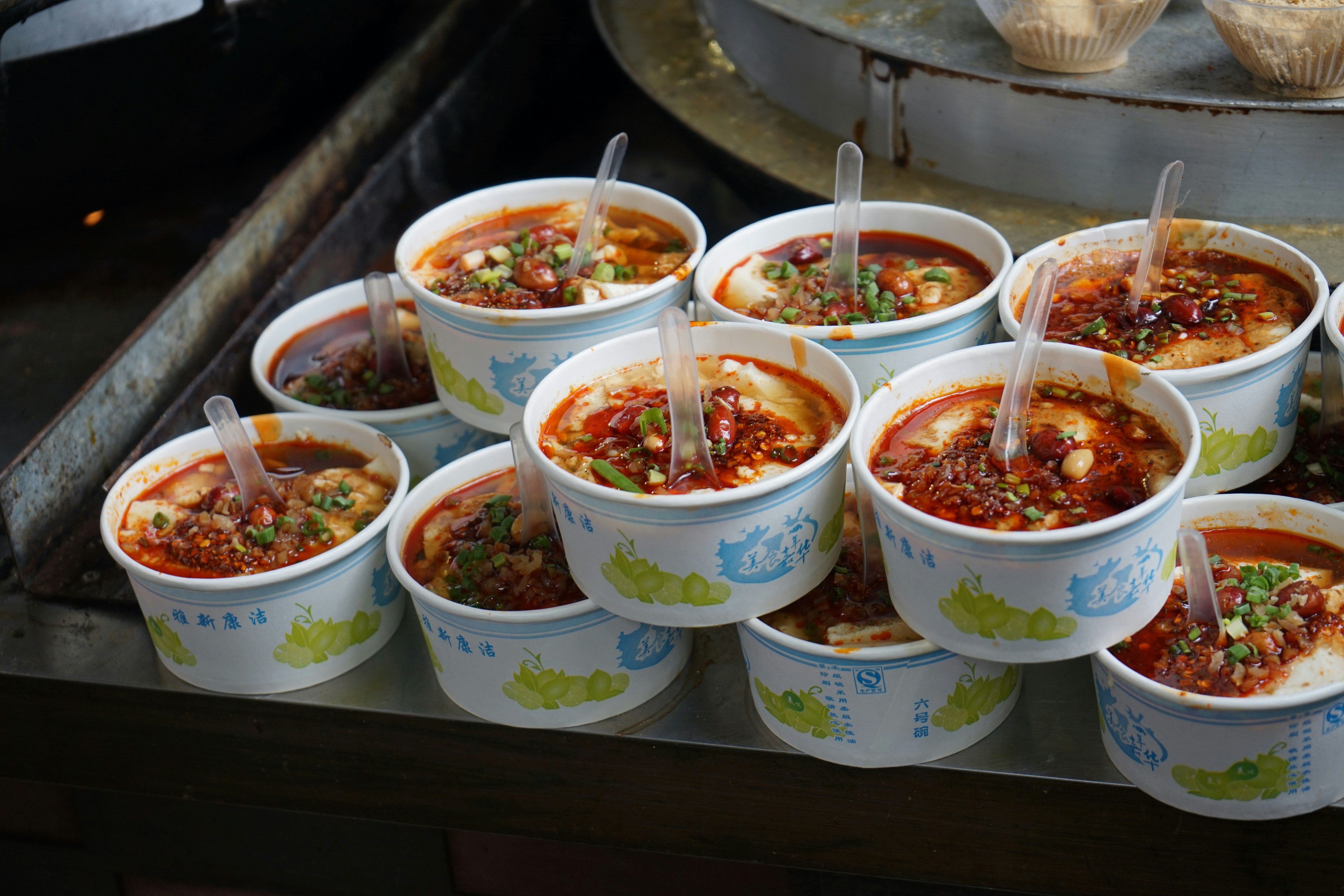
Chinese food is not one cuisine—it’s dozens. The spicy mala of Sichuan, the delicate dim sum of Cantonese, the hand‑pulled noodles in Xi’an, the sweet and sour of Jiangnan—each region has its own specialties. As a first‑timer, you should explore widely but start with dishes that feel familiar: fried rice, dumplings, or hot pot.
Dining in China is often a shared‑plate affair. A group orders several dishes placed in the center, and everyone eats family‑style. Use the serving spoon, not your own chopsticks. Speaking of chopsticks, never stick them upright in your rice bowl (it resembles incense at a funeral). If you’re not comfortable with chopsticks, ask for a fork—most restaurants have them. Restaurants can be loud, with waitstaff shouting orders. Transactions often happen via QR code: scan the table’s code, order, and pay through the app.
For travelers with allergies or dietary restrictions, this is critical: learn key phrases in Chinese. For example, “I am allergic to peanuts” – “Wǒ duì huāshēng guòmǐn” – and show it to the staff. Use a translation app like Google Translate (offline) or Pleco. Many dishes contain hidden MSG, gluten, or dairy. Never assume a dish is safe—ask and confirm. Start your food journey with well‑known cities like Chengdu for Sichuan, Guangzhou for Cantonese, or Xi’an for noodles.

6. Drinking Water and Hot Water Habits Are Different
Tap water in China is not safe to drink. Even locals boil their water before drinking. As a traveler, you should avoid tap water entirely—including ice cubes made from tap water, and raw vegetables washed in tap water. Always drink bottled water or water that has been boiled. Most hotels provide a kettle and two free bottles of water daily.
You’ll also notice that Chinese people drink hot water throughout the day. Many public places, such as train stations and airports, have hot water dispensers. It’s considered healthier for digestion. You can ask for hot water at restaurants; they’ll usually bring it free. If you prefer cold water, order bottled water or specifically ask for cold water (bīng shuǐ).
Never brush your teeth with tap water. Use bottled water even for that. And when eating street food, check that any liquid you consume comes from a sealed bottle. These simple habits prevent traveler’s diarrhea and keep you healthy.
7. Restrooms Require More Preparation Than Many Visitors Expect
Public toilets in China are often squat toilets, not Western sit‑down toilets. In train stations, tourist sites, and older restaurants, you’ll find a porcelain hole in the ground. To use it, squat facing the hood (the flush lever). Carry your own toilet paper and hand sanitizer—many public toilets do not provide paper, and the stalls rarely have soap.
In airports, high‑end hotels, and international chains, you’ll find Western‑style toilets. But don’t assume. Always check before you drop your pants. Also, avoid using your phone in the toilet—it’s considered unhygienic and you might drop it into the squat hole. Keep your belongings in a bag.
A pro tip: Use the toilet before you leave your hotel, and bring a small pack of tissues with you at all times. Many public toilets have attendants who charge ¥1–2 for a few sheets of paper, so keep coins handy. For long train or bus rides, plan your toilet stops at stations where facilities are cleaner.
8. High‑Speed Rail Feels Like Airport‑Style Travel
China’s high‑speed rail network is the world’s largest and a fantastic way to travel between cities. But it’s not like catching a commuter train. You must arrive at the station at least 30–45 minutes early (longer on busy holidays). You go through security screening (baggage X‑ray and metal detector), and then wait in a large hall until your gate is announced.
When booking, pay attention to which station you need. Large cities have multiple stations: Beijing has Beijing South, Beijing West, Beijing East, etc. The exact station name matters. Your ticket will show the station, but double‑check using Apple Maps or Gaode. Keep your passport handy, as it is your ticket—you need to scan it at the gates and show it to inspectors on the train.
On the train, there are three classes: second class (2+2 seats, very comfortable for the price), first class (2+1 seats, more legroom), and business class (lie‑flat seats, premium service). Snacks and drinks are sold from a trolley. The trains are punctual, clean, and fast—Beijing to Shanghai in 4.5 hours. Always keep your passport accessible; you’ll show it multiple times during the journey.
9. Passports Are Used More Often Than Many Tourists Expect
In China, your passport is your primary ID. You need it to check into hotels (even if you booked online), to buy train and plane tickets, to enter attractions, and sometimes to exchange money or use payment apps. Hotels will scan your passport and keep a copy on file. Always carry your passport with you, but store it in a secure, zipped inner pocket. A photocopy or passport photo on your phone is useful but not accepted as official.
When you arrive at a hotel, the receptionist may ask for a deposit (cash or card) in addition to scanning your passport. Some hotels, especially budget ones, may require a registration form. If you lose your passport, go to your embassy and also report it to the local police station (Public Security Bureau) to get a replacement travel document.
Pro tip: Take a color photocopy of your passport photo page and the page with your China visa (if applicable). Keep this copy separate from your passport. Also save a digital copy in your phone’s notes. This speeds up the replacement process if needed.
10. No Tipping and Different Service Expectations Can Surprise Visitors
Tipping is not practiced in China and can actually be considered rude. It is not expected at restaurants, hotels, or for taxis. The service charge is included in the bill. If you leave a tip, the waiter may chase after you to return it. The only exception is in very Western‑oriented places like some high‑end hotels or tour guides who specifically say tipping is accepted. But in general, do not tip.
Service style is different too. Restaurant staff may be less obsequious than in the US. They won’t check on you constantly; you need to call them over if you need something. “Fuwuyuan” (waiter) is the term. In many restaurants, you order using a QR code at the table, and food arrives quickly. If you have a complaint, be polite and direct—arguing loudly won’t help.
Do not tip. It is not part of the culture and can cause awkwardness. Instead, show appreciation by being polite and patient. And remember, customer service in China is efficient but not servile—a different cultural norm that takes getting used to.
How to Prepare Before Your First China Trip
Preparation turns culture shock into culture discovery. Start one month before departure: Check your passport validity (need at least six months beyond your travel dates) and check visa requirements for your nationality. Many Western passports get a 30‑day visa‑free entry (check the latest rules). Then set up your digital toolkit: Install Alipay, WeChat Pay, a VPN or eSIM, Gaode Maps or offline Apple Maps, and a translation app like Pleco. Link your credit card and verify your payment apps with a small test.
Next, pack smart: A universal power adapter (China uses 220V, two‑flat‑pin plugs), portable charger, toilet paper, hand sanitizer, and a reusable water bottle (empty through security, fill with bottled water after). Print or save offline: your flight itinerary, hotel confirmations in Chinese, train e‑tickets, and emergency contact numbers. Learn a few phrases: Hello (nǐ hǎo), Thank you (xiè xiè), Where is…? (…zài nǎlǐ?), and Check, please (mǎidān).
On arrival day, give yourself plenty of buffer. After immigration, get local cash from an ATM, activate your data plan, test your payment apps with a small purchase, and find your carrier’s shop if something doesn’t work. Then head to your hotel to rest. The first 24 hours are the hardest; after that, you’ll feel the rhythm.
Conclusion: Turn Culture Shock Into Better Travel Decisions
Culture shock isn’t a bad thing—it’s a sign you’re experiencing something new. China’s differences, from cashless payments to squat toilets, are part of what makes a trip here memorable. With the right preparation, what could be a frustrating surprise becomes an interesting challenge. Remember: set up your apps before you leave, keep backup cash, respect local customs, and stay patient in crowds.
Your first trip to China will be one of the most exciting adventures you’ll ever take. Use this guide as a cheat sheet. When you arrive, take a deep breath, smile, and embrace the chaos. And if you need more detailed help, explore our Travel Essentials page for packing lists, our Destinations guides for city‑specific tips, and our Itinerary Planner to map out your journey.
Before you go
- ✓Set up Alipay and WeChat Pay with a linked foreign card and test a small transaction before departure.
- ✓Choose a connectivity method (eSIM, roaming, local SIM, or pocket WiFi) and activate it before landing.
- ✓Download offline maps and save screenshots of hotel addresses, train bookings, and emergency numbers.
- ✓Pack toilet paper, hand sanitizer, bottled water, and a portable charger.
- ✓Learn a few key Chinese phrases and prepare allergy or dietary restriction cards in Chinese.
Common mistakes
- Assuming tap water is safe to drink—never drink tap water or use it for brushing teeth.
- Forgetting to bring toilet paper—many public restrooms don't supply it.
- Relying only on Google Maps—use Apple Maps or Gaode Maps for accurate navigation.
- Tipping at a restaurant—it’s not customary and can cause confusion.
- Arriving at the wrong train station—large cities have multiple stations; verify the exact station name.
FAQ
Do I need a VPN to use WhatsApp and Instagram in China?
Yes, these apps are blocked. Install a reliable VPN before you leave, or use an eSIM that provides a domestic IP address and bypasses the Great Firewall. Without a VPN, you won’t be able to access many Western websites and apps.
Can I use my credit card everywhere in China?
No, many small shops, markets, and taxis do not accept foreign credit cards. Mobile payments (Alipay/WeChat Pay) are far more common. Carry some cash as backup and try to use your card mainly at hotels and larger establishments.
What if I have dietary restrictions like gluten intolerance or a peanut allergy?
Communicate your restrictions clearly with written Chinese phrases. Many ingredients (soy sauce, oil) contain gluten or peanuts. Use a translation app and show the staff a card explaining your allergy. Start with simple dishes and confirm ingredients before ordering.
Useful next steps
Policy, app, transport, and booking procedures can change. Recheck official sources and operating platforms before you pay for non-refundable travel.