










Quick answer
- Western travelers often face unexpected culture shock in China around cashless payments, internet restrictions, and public habits.
- Practical preparation—like setting up Alipay and WeChat Pay, getting an eSIM, and learning squat toilet etiquette—dramatically reduces stress.
- This guide covers the top culture shocks and provides actionable steps for a smooth first visit.
Introduction: China feels different, but preparation makes the shock manageable
You've booked your first trip to China. You've seen the Great Wall, read about Zhangjiajie's towering peaks, and imagined yourself slurping noodles in Chengdu. But as departure day approaches, a nagging question surfaces: *What am I actually walking into?* Language barriers, a different internet, cashless payments, and unfamiliar bathroom setups can make even seasoned travelers anxious. That's normal. But here's the good news: most of the culture shock is predictable, and a little pre-trip prep turns uncertainty into confidence.
This guide focuses on the specific shocks that catch Western tourists off guard—from the moment you land to your first meal on the street. We'll cover payment habits, the Great Firewall, personal space, food etiquette, water safety, and more. By the end, you'll know exactly what to expect and how to handle it. Let's turn your first trip to China into an adventure, not a shock.
1. China is more cashless than many Western travelers expect
You walk into a convenience store, pull out a crisp ¥100 note, and the cashier looks mildly annoyed. They point to a QR code. This is your first encounter with China's cashless economy. In major cities like Shanghai, Beijing, and Guangzhou, Alipay and WeChat Pay dominate even small purchases. Street vendors, metro ticket machines, and taxis prefer mobile payments. Foreign cards are not always accepted directly, so setting up these apps before you arrive is critical.
How to prepare: Install Alipay and WeChat Pay on your phone. Link a foreign credit card or use a travel card. Complete identity verification before departure—some steps require SMS. Test a small payment (like a ¥1 transaction) to ensure it works. Always carry backup cash (about ¥500) for situations where mobile payment fails, such as some rural areas, market stalls, or when your phone battery dies. Remember: no tipping is the norm, so you don't need extra cash for gratuities.
2. The internet works differently behind the Great Firewall
You land, turn on mobile data, and try to open Google Maps or Instagram. Nothing loads. Welcome to the Great Firewall. Many Western websites and apps—Google, Facebook, WhatsApp, Twitter, and Instagram—are blocked in China. This can be a major shock if you rely on Google Maps for navigation or WhatsApp for communication. The solution is not to fight it, but to prepare alternatives.
Before departure, install a reliable VPN on your phone and laptop. Test it at home to ensure it works. Some VPNs are blocked in China; research current recommendations. Alternatively, use a China-compatible eSIM that provides a local IP but might still require a VPN for blocked services. Download offline maps on apps like Maps.me or Gaode Maps (Chinese). Save screenshots of your hotel address, train bookings, and important contacts. For messaging, WeChat is the dominant platform—install it and ask your hotel or tour guide to connect via WeChat.
3. Super apps replace many separate travel tools
In the West, you use separate apps for maps, messaging, payments, and ride-hailing. In China, WeChat and Alipay are super apps that do everything. WeChat handles messaging, payments, miniprograms for train tickets, food delivery, and even doctor appointments. Alipay offers similar functions plus a 'Tour Pass' for foreign card linking. This consolidation is efficient once you're used to it, but can feel overwhelming at first.
Your digital survival kit for China: WeChat (for communication and payments), Alipay (for payments and travel services), DiDi (ride-hailing, integrated into Alipay mini-program), Ctrip (train and flight bookings), and a translation app like Google Translate (download Chinese offline pack) or Baidu Translate. Set up these apps before you go. Test that your foreign card works on Alipay's Tour Pass. Save screenshots of key QR codes—like your hotel address in Chinese—to show taxi drivers. This preparation turns a potential headache into a seamless experience.

4. Crowds, queues, and personal space can feel intense
China is the world's most populous country, and you'll feel it. In metro stations, tourist attractions, and even sidewalks, crowds can be dense. Personal space is smaller than what many Westerners are used to. Queuing might seem chaotic, but there is usually an unspoken order. Pushy behavior in lines is rare, but expect people to stand closer than you're comfortable with. This isn't rudeness—it's a cultural norm.
Tips: Stay calm and go with the flow. In crowded tourist spots like the Great Wall or Forbidden City, visit early morning or late afternoon to avoid peak times. Use a mask in crowded indoor spaces—common in China for health and pollution reasons. Practice patience. If you feel overwhelmed, step into a quiet cafe or park. Remember that locals are generally helpful; if you look lost, someone might offer assistance. Embrace the energy—it's part of the experience.
5. Food culture is more regional, shared, and fast-moving
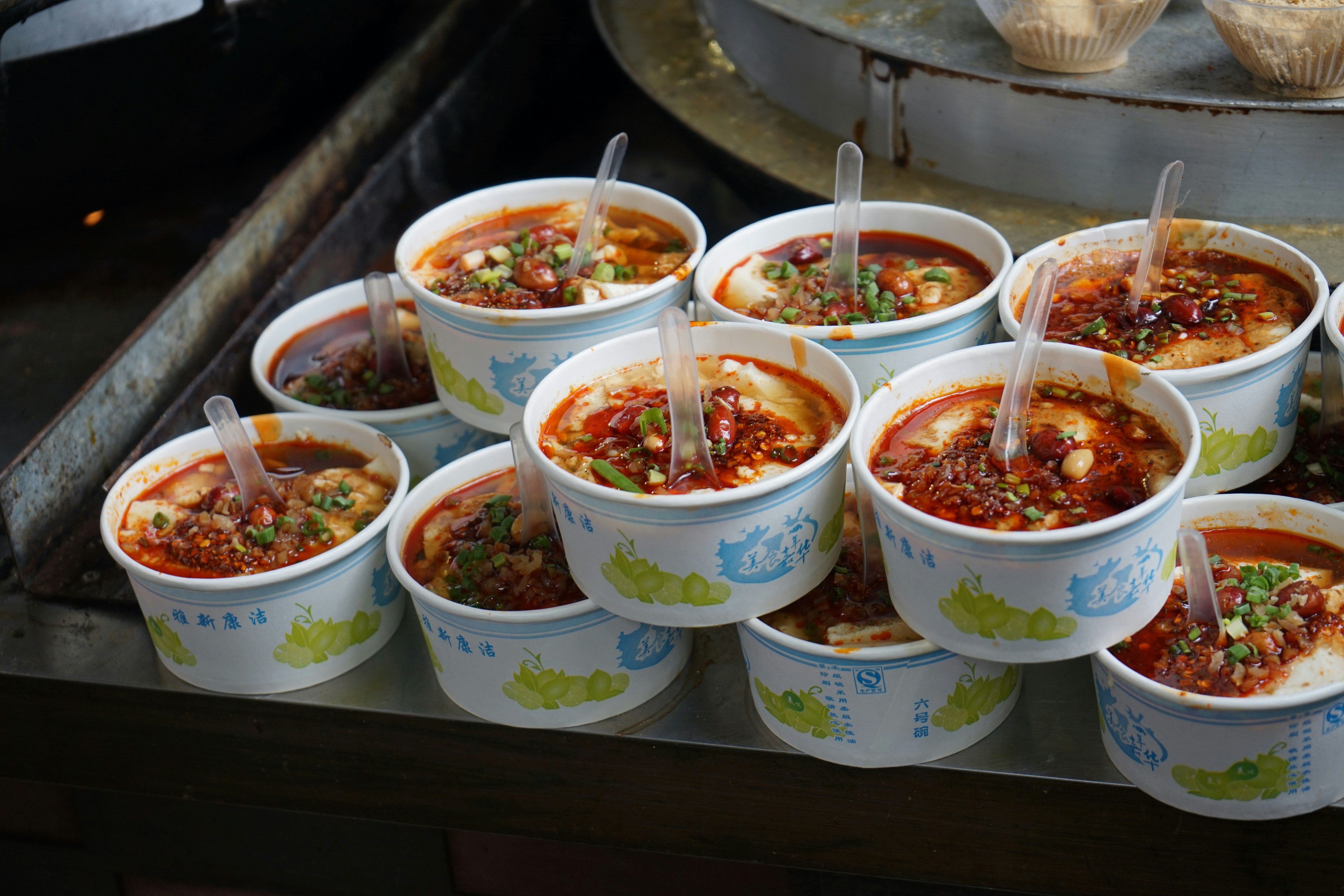
Chinese cuisine is not a monolith. The food in Chengdu (Sichuan) is fiery and numbing, while Guangzhou (Cantonese) emphasizes freshness and subtle flavors. Xi'an offers hearty noodles and lamb skewers in the Muslim Quarter. Shanghai has sweet and savory dishes like xiaolongbao. As a first-timer, choose a city known for its food scene—Chengdu is a great start. Dining is often communal: dishes are placed in the center and shared. Use your own chopsticks to take food from communal plates (or use serving chopsticks if provided).
Ordering can be challenging without Chinese. Use translation apps with camera function to scan menus. Point at dishes other tables are eating. Many restaurants have QR code ordering—scan, see pictures, and order via WeChat or Alipay. For dietary restrictions, prepare a written card in Chinese explaining your allergies (e.g., 'I am allergic to peanuts' or 'No MSG, please'). Start with familiar dishes like dumplings, fried rice, or hot pot (where you cook your own ingredients). Beware of tap water—never drink it. Restaurants serve hot water or boiled water for free. Bottled water is cheap and widely available.

6. Drinking water and hot water habits are different
One of the simplest yet most important adjustments: do not drink tap water. In China, tap water is not potable due to contamination risks. Even locals boil their water before drinking. Most hotels provide a thermos or an electric kettle for boiling water. Restaurants offer hot water (开水, kāishuǐ) for free—ask for it if not provided. Many public spaces have hot water dispensers. This habit of drinking hot water extends to trains, airports, and even some public toilets.
Prepare: Bring a reusable water bottle and fill it with boiled water or buy bottled water (怡宝, Yībǎo or 农夫山泉, Nóngfū Shānquán). Avoid ice unless you're sure it's made from filtered water. In restaurants, specify 'no ice' (不要冰, bù yào bīng). Tooth brushing? Use bottled water or boiled water for oral hygiene. This precaution prevents stomach upsets that could ruin your trip. Remember, hot water is also a cultural comfort—many Chinese believe it aids digestion. Embrace the habit and it becomes natural.
7. Restrooms require more preparation than many visitors expect
Public toilets in China can be a shock. Squat toilets are common in train stations, public parks, and some restaurants, though Western-style toilets are prevalent in hotels and upscale malls. The most critical missing item: toilet paper. Many public restrooms do not provide it. Always carry a small pack of tissues or wet wipes with you. Some toilets have a bin next to the toilet for used paper—do not flush paper as plumbing systems often cannot handle it.
Other tips: Learn to use a squat toilet confidently—it's healthier and more hygienic once you get the hang of it. Carry hand sanitizer because soap is not always available. In remote areas, toilets might be basic (holes in the ground) so have a backup plan. For long train journeys, public toilets on high-speed trains are Western-style and relatively clean, but bring your own paper. Feminine hygiene products may require special disposal—use the bin. Being prepared reduces stress and keeps your trip comfortable.
8. High-speed rail feels like airport-style travel
China's high-speed rail network is world-class, but the experience has its own culture shocks. You need passport for ticket purchase and boarding—just like an airport. Stations are massive, with multiple security checks. Arrive at least 30 minutes early for sub-2-hour trips, and 1 hour for longer distances. Luggage is scanned like at airports. Boarding gates close 5 minutes before departure, so don't dawdle.
Ticketing: Use Ctrip or Alipay mini-programs to book. You can also buy at stations with passport, but queues can be long. Choose 'second class' for value or 'first class' for more space. Onboard, trolley service sells snacks and drinks (cash or mobile payment). Announcements are in Chinese and English on major routes. Keep your passport handy for ticket checks. Be aware of station names: Beijing South, Beijing West, Beijing Chaoyang—verify which one you need. High-speed rail is the best way to connect cities like Beijing-Shanghai (4.5 hours) or Guangzhou-Shenzhen (30 minutes).
9. Passports are used more often than many tourists expect
Your passport is the single most important item in China. You will use it not only for immigration but also for hotel check-in (they must register foreign guests with police), train ticket purchase and boarding, domestic flight check-in, some attraction entries (especially in Tibet or border areas), and even currency exchange. Keep it on you at all times, but secure it in a zippered pocket or hotel safe when not needed.
Make photocopies or digital scans of your passport data page and Chinese visa. Store them separately. If you lose your passport, contact your embassy immediately and file a police report. Hotel staff will ask for your passport upon arrival—don't be alarmed. For train travel, some stations require you to show your passport at the ticket gate, so have it ready. A passport holder with a neck strap can help, but be mindful of pickpockets in crowded areas. This frequent use is a norm, not a hassle.
10. No tipping and different service expectations can surprise visitors
In China, tipping is not customary and can even be considered awkward or rude. Service charges are included in bills. You do not tip taxis, restaurant staff, hotel housekeeping, or tour guides. However, for exceptional service, a small gift from your home country is appreciated more than cash. This no-tipping culture might feel strange if you're used to it, but it simplifies transactions.
Service expectations: Waitstaff may not hover or check on you frequently—call them if you need something. In busy restaurants, getting attention might require a louder '服务员' (fúwùyuán, waiter). Tipping is unnecessary, but do show gratitude with a smile and '谢谢' (xièxiè). For guided tours, check if the company includes service fees—if not, you could offer a small gift but not cash. This difference frees you from constant mental math about tips and lets you focus on the experience.
How to prepare before your first China trip
Preparation turns culture shock into a smooth trip. Here's a condensed action plan: 1) Set up Alipay and WeChat Pay with a foreign card—test with a small payment. 2) Install a VPN or get a China-compatible eSIM from a provider that works with a VPN. 3) Download offline maps (Maps.me or Gaode) and translation apps (Google Translate offline pack, Pleco). 4) Save digital copies of passport, visa, and hotel bookings. 5) Pack: toilet paper, hand sanitizer, reusable water bottle, power bank, and written Chinese phrases for allergies or dietary needs.
Read our Travel Essentials guide for detailed app setup instructions. For itinerary inspiration, check Destinations like Chengdu, Beijing, or Guangzhou. If you need help planning your route, use our Itinerary Planner. Don't forget to verify your visa requirements on our Visa & Entry page. China is safe and rewarding when you're prepared. The most important takeaway: set up your phone before you land. That one step solves 80% of first-day shocks.
Conclusion: turn culture shock into better travel decisions
Every culture shock you read about—cashless payments, the Great Firewall, squat toilets, no tipping—is an opportunity to learn and adapt. First-time travelers to China often say, 'I wish I had known this before.' Now you do. The key is to embrace the differences instead of resisting them. When you use QR codes to pay for a street snack, navigate via a super app, or share a hot pot with new friends, you're not just visiting—you're experiencing.
Your first trip to China will be filled with moments that challenge and delight you. The Great Wall at sunrise, the neon-lit Bund in Shanghai, the spicy aroma of a Chengdu hot pot—these are unforgettable. By preparing for the shocks, you free yourself to enjoy the wonders. So take a deep breath, pack your tissues, download those apps, and get ready for a journey that will expand your perspective. China is waiting.
Before you go
- ✓Set up Alipay and WeChat Pay with foreign card before departure and test a small payment.
- ✓Install a reliable VPN on all devices and download offline maps and translation apps.
- ✓Pack toilet paper, hand sanitizer, and a reusable water bottle for hot water.
- ✓Make copies of your passport and visa; keep the original accessible but secure.
- ✓Learn key Chinese phrases for ordering food and asking directions, or have a phrase card ready.
Common mistakes
- Assuming everywhere accepts cash – many places are cashless; rely on mobile payments.
- Drinking tap water – always drink boiled or bottled water; avoid ice in suspicious places.
- Forgetting toilet paper – public restrooms rarely provide it; carry your own.
- Not having a VPN or alternative app – many Western apps are blocked; prepare offline solutions.
- Tipping out of habit – it's not expected and can cause confusion; instead, say thank you.
FAQ
What is the biggest culture shock for Western tourists in China?
The biggest shocks are usually cashless payments (everyone uses Alipay/WeChat Pay) and the internet blockade (Great Firewall). Many travelers also find the crowds, squat toilets, and different service expectations surprising.
Do I need a VPN for my first trip to China?
Yes, if you want to access Google, Facebook, WhatsApp, or other blocked sites. Install a reputable VPN before you go and test it. Some eSIMs also provide VPN services.
Can I use my credit card everywhere in China?
No. While international cards are accepted at many hotels and large stores, daily transactions rely on Alipay/WeChat Pay. Small shops, street vendors, and taxis prefer mobile payment. Set up Alipay's Tour Pass to link your foreign card.
Useful next steps
Policy, app, transport, and booking procedures can change. Recheck official sources and operating platforms before you pay for non-refundable travel.